MoU Universitas Abdurachman Saleh Situbondo dengan Universitas 17 Agustus 1945 BanyuwangiBanyuwangi, 18 Maret 2021
Penandatanganan MoU Universitas Abdurachman Saleh Situbondo dengan Universitas 17 Agustus 1945 Banyuwangi dengan penandatanganan MoA antara Fakultas Ilmu Sosial dan Ilmu Politik UNARS dengan Fakultas Ilmu Sosial dan Ilmu Politik UNTAG, Fakultas Hukum UNARS dengan Fakultas Hukum UNTAG, Fakultas Ekonomi UNARS dengan Fakultas Ekonomi UNTAG, Fakultas Keguruan dan Ilmu Pendidikan UNARS dengan Fakultas Keguruan dan Ilmu Pendidikan UNTAG, dan Fakultas Pertanian UNARS dengan Fakultas Pertanian UNTAG.
Penandatangan MoU dan MoA di Universitas 17 Agustus 1945 Banyuwangi.

Persyaratan :
- Minimal lulusan tahun 2020
- Beasiswa SAGATUNA ditujukan untuk siswa yang tidak mampu namun memiliki potensi akademik yang baik.
- Pendaftaran offline
Lokasi pendaftaran offline :
- Kantor Cabang Dinas Pendidikan Wilayah Bondowoso Kabupaten Situbondo lokasi Gg. Nusantara No.1, Mimbaan Tengah, Mimbaan, Kec. Panji, Kabupaten Situbondo, Jawa Timur 68322
- Sekretariat PMB / Ruang Biro 3 Universitas Abdurachman Saleh Situbondo lokasi Kampus 1 Jl. PB. Sudirman No. 07, Situbondo.
- Formulir tersedia di lokasi pendaftaran
- Biaya Pendaftaran Rp 300.000,- (tiga ratus ribu rupiah)
- Fotokopi Ijazah atau Surat Keterangan Lulus (SKL) sebanyak 1 lembar
- Fotokopi Surat Keterangan Tidak Mampu (SKTM), KIP, dan PKH sebanyak 1 lembar
- Fotokopi KTP sebanyak 1 lembar
- Fotokopi Kartu Keluarga sebanyak 1 lembar
- Registrasi (Daftar Ulang) sebesar Rp 1.100.000,- (satu juta seratus ribu ripuah)
Tes Masuk Penerimaan Mahasiswa Baru jalur SAGATUNA, diantaranya sebagai berikut :
Tes Masuk Penerimaan Mahasiswa Baru jalur SAGATUNA, diantaranya sebagai berikut :
- Tes Tulis
Materi Tes Tulis berupa TPA (Tes Potensi Akademik) dan TKBI (Tes Kemampuan Bahasa Inggris)
- Tes Interview
- Verifikasi Faktual
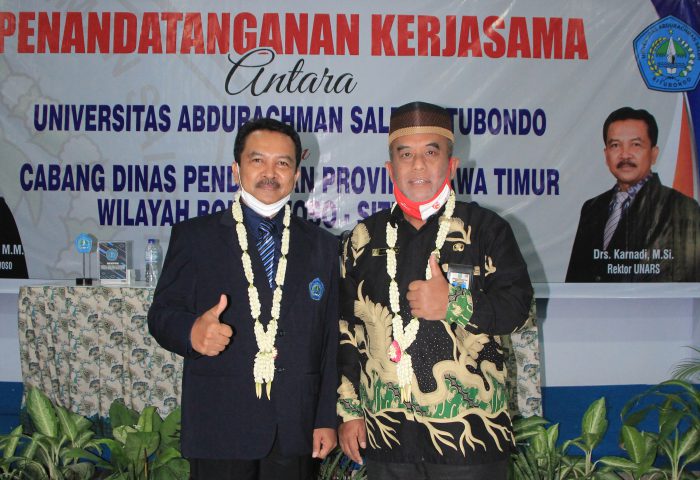
SITUBONDO, Jawa Pos Radar Situbondo – Ini kesempatan emas bagi lulusan SMA/SMK di Kabupaten Situbondo dan Bondowoso untuk meraih gelar sarjana tanpa biaya mahal. Iya, Universitas Abdurachman Saleh Situbondo (UNARS) akan melaksanakan program sagatuna (satu keluarga satu sarjana) dari cabdindik wilayah bondowoso yang memungkinkan kuliah gratis bagi lulusan SMA/SMK di dua kabupaten tersebut.
Program itu ditandai dengan penandatanganan nota kesepahaman atau MoU antara Rektor Unars dengan Kepala Cabang Dinas Pendidikan (Cabdindik) Wilayah Bondowoso-Situbondo Dr. Drs. H. Sugiono Eksantoso, M.M kemarin (04/02). Dilanjutkan penandatanganan MoA oleh seluruh Kepala SMA/SMK di dua kabupaten tersebut.
Acara MoU dibagi dalam dua sesi. Sesi pertama dihadiri 60 kepala sekolah pada pukul 08.00. Dilanjutkan sesi kedua pada pukul 10.00 dengan 90 kepala sekolah. Pembagian sesi itu untuk mengantisipasi kerumunan. Dalam penanadatanganan tersebut, diterapkan protokol kesehatan secara ketat. Selain kepala sekolah, hadir juga guru BK.
Rektor Unars, Drs. Karnadi, M.Si mengatakan, melalui program Kampus Merdeks, mahasiswa nantinya akan memberikan asistensi atau pendampingan kepada para siswa SMA/SMK secara berkelanjutan. Kampus Merdeka juga selaras dengan program utama Cabdindik Bondowoso-Situbondo. Yaitu satu keluarga satu sarjana (Sagatuna).
Ada empat fokus kerjasama tersebut. Yaitu pendidikan dan pengajaran, penelitian, pengabdian kepada masyarakat, dan pengembangan SDM. “Intinya, kami siap membantu mensukseskan program Cabdindik wilayah Bondowoso-Situbondo,” tegas Karnadi.

Program asistensi/pendampingan yang dilaksanakan dalam waktu dekat ini adalah, sekolah pencetak wiraswasta (SPW); kampung bahasa; dan Science, Technology, Engineering dan Mathematics (STEM). Untuk kepentingan itu, Unars sudah menunjuk tiga orang koordinator.
Program SPW dikoordinatori Dr. Randika Fandiyanto, S.E., M.M. dan koordinator Kampung Bahasa Ahmad Yusuf Firdaus, S.S., M.Hum. sedangkan. Nuril Hudha, S.Pd., M.Si ditunjuk sebagai koordinator yang membidangi kegiatan STEM. “Ketiga dosen yang menjadi koordinator ini akan menunjuk beberapa tim dari dosen dan mahasiswa untuk membantu memberikan pendampingan setiap kegiatan SPW, Kampung bahasa maupun STEM di SMK/SMA se Kabupaten Bondowoso dan Situbondo,” terang Karnadi.

Karnadi menambahkan, selain memfasilitasi tenaga ahli di tiga program itu, Unars juga bersedia memfasilitasi Guru BK untuk mempublish karya ilmiah guru BK pada jurnal Consilium (jurnal pendidikan dan konseling) milik Unars.
Visi Unars adalah kampus pelopor kewirausahaan. Karnadi mengatakan, jika 30 persen saja masyarakat Bondosowo dan Situbondo jadi pengusaha, maka tidak akan ada lagi pengangguran. “Ayo kita bersinergi dalam mensukseskan program Cabang Dinas Pendidikan, wilayah bondowoso” ajaknya.
Karnadi juga menyampaikan, saat ini Unars telah membuka pendaftaran mahasiswa baru. Dia mengajak masyarakat agar mengkuliahkan putra-putrinya di Unars. “Program Studi sudah disesuaikan dengan kebutuhan masyarakat kedepan, sehingga sangat cocok jika kuliah di Unars,” pungkasnya.
Kepala Cabang Dinas Pendidikan Wilayah Bondowoso-Situbondo, Sugiyono Eksantoso menerangkan, kerjasama dengan Unars sangat mendukung kesuksesan program Sagatuna. Termasuk juga South East Asian Minister of Education Organization (SEAMEO) dan program lainnya.
Sugiyono mengatakan, kuliah di Unars memberikan harapan bagi siswa dari kalangan keluarga tidak mampu untuk merengkuh gelar sarjana. “Menjadi sarjana bukan hanya dari keluarga menengah ke atas saja, tapi juga untuk mereka yang menengah ke bawah,” katanya.
Otomatis, ke depan akan muncul banyak sarjana. Sehingga akan berdampak terhadap pertumbuhan ekonomi dan kesejahteraan masyarakat. “Mudah-mudahan dengan program ini, Situbondo dan Bondowoso tidak lagi menjadi daerah tertinggal dalam bidang pendidikan,” harapnya

Hari Senin, 1 Februari 2020 Universitas Abdurachman Saleh Situbondo selenggarakan penandatanganan Kerjasama dengan beberapa kampus, Penandatangan Memorandum of Understanding (MoU) dilaksanakan antara Universitas Abdurachman Saleh Situbondo, Universitas Panca Marga Probolinggo, Universitas PGRI Banyuwangi, Universitas Islam Jember dan Sekolah Tinggi Ilmu Ekonomi Widyagama Lumajang. Bertempat di Ruang Aula 1 Kampus 1 UNARS kegiatan ini berlangsung sukses dilaksanakan. Dihadiri langsung oleh Rektor UNARS Drs. Karnadi, M.Si, Rektor UPM Prof. Dr. Ir. H. R. Abdul Haris, M.M., Rektor Universitas PGRI. Dr.H. Sadi, MM, Rektor UIJ Drs. H. Abdul Hadi, M,M. dan Rektor STIE Widyagama Lumajang Dr. Ratna Wijayanti Daniar Paramita, SE., MM.

Sambutan Rektor UNARS menyampaikan bahwa kita harus mendorong suksesnya program Merdeka Belajar Kampus Merdeka (MBKM) yang digagas oleh Kementerian Pendidikan.
Poin Kerjasama yang akan dilaksanakan yaitu penguatan pelaksanaan tridharma perguruan tinggi khususnya di bidang Pendidikan Penelitian dan Pengabdian serta Pengembangan SDM. Dalam kesempatan tersebut juga dilaksanakan beberapa MoA (Memorandum of Action) antar Fakultas di masing-masing Prodi sehingga dapat secara langsung dilaksanakan dalam waktu dekat.

Kamis, 28 Januari 2020 Rektor Universitas Abdurachman Saleh (UNARS) Situbondo Drs. Karnadi, M.Si laksanakan Penandatanganan Kerjasama (MoU) dengan Kepala Balai Perikanan Budidaya Air Payau (BPBAP) Situbondo, bertempat di Kantor BPBAP di Jl. Raya Pecaron, Desa Klatakan, Kec. Panarukan. Kabupaten Situbondo.
Hadir pada kegiatan penandatanganan naskah MoU tersebut Rektor UNARS – Drs. Karnadi, M.Si, Dekan Fakultas Pertanian – Dr.Ir. Endang Suhesti, M.P Staf Ahli Rektor Dr. Randika Fandiyanto, S.E., M.M., Kepala biro Kemahasiswaan Usrotul Hasanah, S.Sos, M.Si, Kepala Program Studi Teknik Kelautaan Ani Listriyana, S.Si, M.T. dan Kepala Program Studi Biologi Muhammad Thoifur Ibnu Fajar S.Pd. M.Sc beserta jajarannya, Kepala BPBAP Situbondo – Ir. Nono Hartanto.M.Aq beserta jajarannya di RR. Kantor Utama BPBAP Situbondo.

Terdapat 3 MoU yang ditandatangani oleh kedua pihak, yaitu Nota Kesepahaman (MoU) antara UNARS yang diwakili oleh Rektor dengan BPBAP Situbondo dalam rangka pendidikan, penelitian dan pengabdian kepada masyarakat, kedua Perjanjian Kerjasama (MoA) antara Program Studi Biologi dengan BPBAP Situbondo tentang praktek kerja lapangan dan ketiga Perjanjian Kerjasama (MoA) antara Program Studi Teknik Kelautan dengan BPBAP Situbondo tentang praktek kerja lapangan. Kegiatan penandatanganan ini sebagai wujud Kerjasama dari kedua instansi untuk mengembangkan perikanan dan memberikan dampak positif untuk kesejahteraan masyarakat.


Dalam kesempatan tersebut terdapat beberapa arahan dari Kepala BPBAP Situbondo, yaitu adanya harapan bahwa perjanjian tersebut tidak berhenti hanya diatas kertas, melainkan secara bersama untuk terlibat dan bersinergi sehingga ada gaung dan memberikan dampak positif kepada UNARS, Balai, Dinas Perikanan serta masyarakat di sektor perikanan budidaya. Kepala Balai menegaskan bahwa tidak ada permasalahan dalam pencatutan bahwa Kawasan binaan merupakan Kawasan yang dibangun si A atau si B, yang terpenting adalah membawa manfaat bagi penerima bantuan tersebut, Disamping itu adanya harapan nantinya akan terjalin Kerjasama dalam mengembangkan suatu Kawasan atau wilayah dalam rangka membangun sektor perikanan dengan program yang sesuai dengan kegiatan pada tahun yang bersangkutan. Pembangunan Kawasan tersebut sebaiknya difokuskan sesuai dengan peran masing-masing dengan target yang sudah ditentukan. Kepala BPBAPS mengajak kepada pengajar dari UNARS untuk bersama berkolaborasi secara baik dalam suatu bidang untuk kemanfaatan Bersama. Peningkatan pengetahuan anak didik melalui kegiatan praktek lapangan dan mendorong mindset anak didik untuk dapat mandiri dan menjadi entrepreneur sehingga lulusan UNARS diharapkan menjadi leading dengan melihat potensi daerah Kab.Situbondo sebagai usaha atau industry perikanan.
Arahan dari Rektor Universitas Abdurachman Saleh menyambut gembira atas dorongan Kepala BPBAPS untuk melakukan kolaborasi bersama. Dikarenakan di UNARS terdapat lembaga LP3M yang nantinya akan didorong untuk menindaklanjuti arahan Kepala BPBAPS yang sifatnya Kerjasama sehingga ada output dan target yang dicapai dalam rangka pembangunan Kawasan perikanan budidaya. Rektor UNARS juga menyampaikan bahwa Kerjasama ini tidak hanya bentuknya diatas kertas, namun implementasi Kerjasama ini dapat diterapkan di beberapa Kawasan Binaan UNARS untuk sector perikanan. Meskipun ini kesepakan (MoU) ini baru dilaksanakan hari ini, namun selama stu tahun terakhir UNARS dan BPBAPS Telah banyak melakukan kegiatan diantaranya kegiatan Pelepasan Kerapu Macan di Kerambah Apung UNARS, Penebaran Ikan Faname di kerambah Millenial, Kunjungan kerja Bersama di Dusun Merak Baluran, Rektor UNARS berharap dengan MoU ini kedua lembaga bisa lebih bersemangat dan berpacu untuk kesejahteraan masyarakat Kabupaten Situbondo.
Di Kabupaten Situbondo, terpilihnya Duta Generasi Berencana (Genre) menjadi momen penting yang menandai komitmen remaja dalam mempersiapkan diri untuk masa depan yang lebih baik. Duta Genre, yang terpilih melalui proses seleksi ketat, bukan hanya sekadar perwakilan, melainkan juga agen perubahan yang akan menginspirasi remaja lainnya untuk merencanakan kehidupan berkeluarga dengan bijaksana.
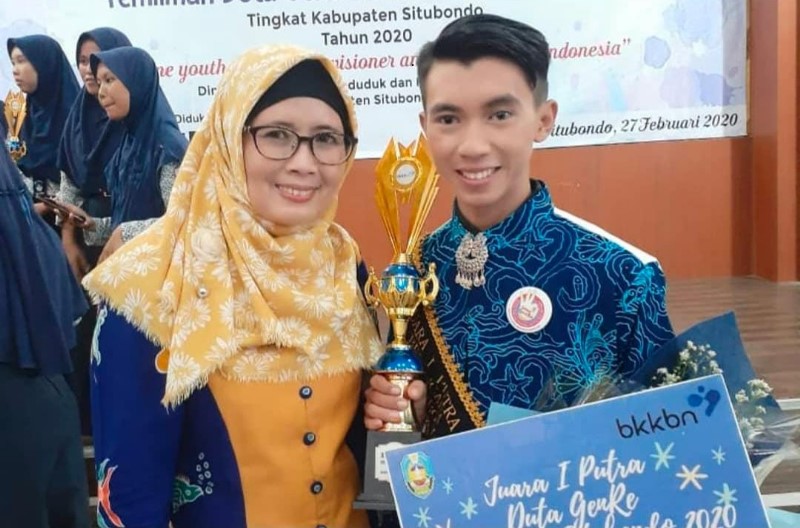
Di Kabupaten Situbondo, terpilihnya Duta Generasi Berencana (Genre) menjadi momen penting yang menandai komitmen remaja dalam mempersiapkan diri untuk masa depan yang lebih baik. Duta Genre, yang terpilih melalui proses seleksi ketat, bukan hanya sekadar perwakilan, melainkan juga agen perubahan yang akan menginspirasi remaja lainnya untuk merencanakan kehidupan berkeluarga dengan bijaksana.
Duta Genre Situbondo, dengan segala potensi dan pengetahuan yang mereka miliki, akan menjadi role model bagi remaja sebaya mereka. Mereka akan menjadi sumber informasi terpercaya mengenai berbagai isu terkait remaja, seperti kesehatan reproduksi, pencegahan pernikahan dini, dan penyalahgunaan narkoba. Melalui berbagai kegiatan penyuluhan dan sosialisasi, mereka akan menanamkan nilai-nilai positif dan memberikan pemahaman yang komprehensif tentang pentingnya perencanaan keluarga.
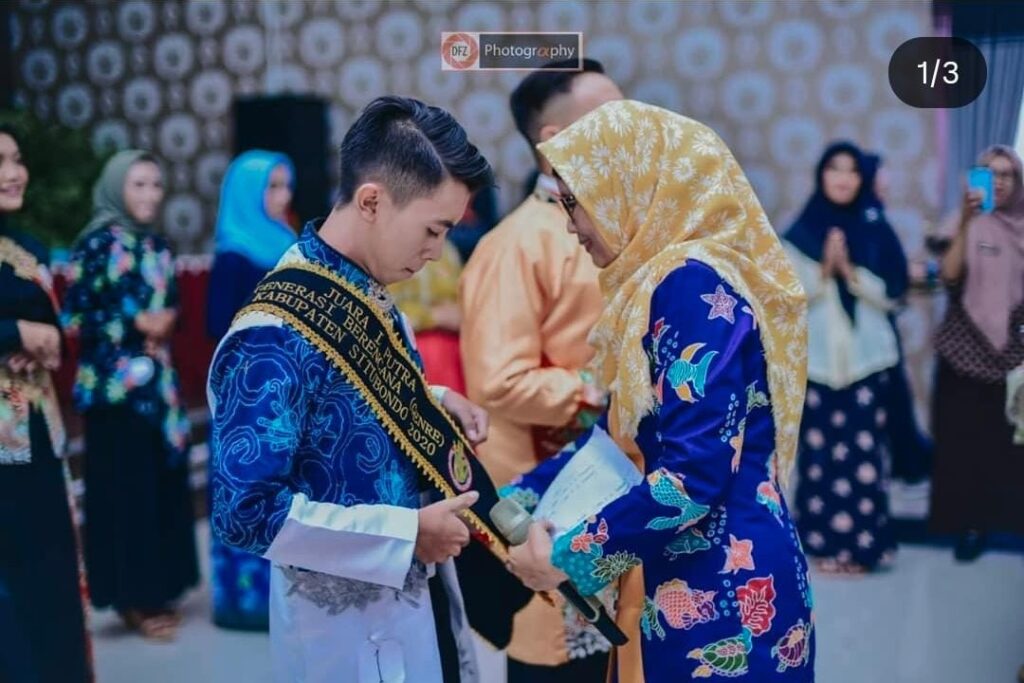
Dengan terpilihnya Juara 1 Duta Genre Situbondo 2020 yaitu Andi Kusuma Wardhani dari Prodi Ilmu Hukum FH UNARS , diharapkan akan tercipta generasi muda yang berkualitas, mampu membangun keluarga yang harmonis, dan memberikan kontribusi positif bagi kemajuan bangsa. Semoga Duta Genre yang terpilih dapat menjalankan tugasnya dengan baik dan menjadi inspirasi bagi remaja lainnya untuk terus belajar, berkembang, dan berkarya.
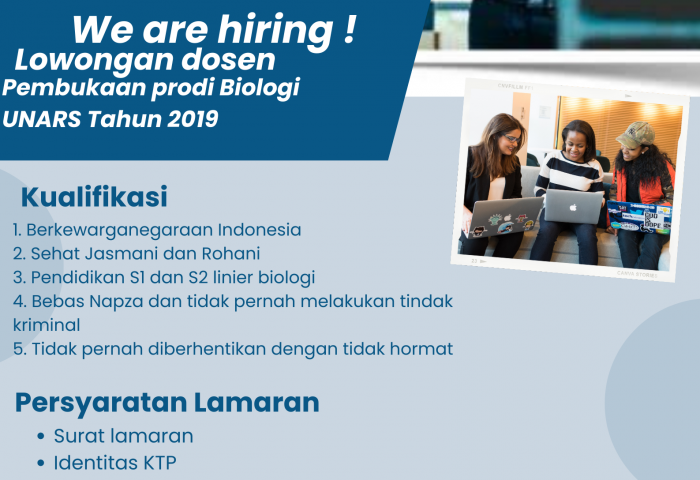

Universitas Abdurachman Saleh Situbondo membuka kesempatan untuk berkarier menjadi Dosen Tetap Universitas Abdurachman Saleh Situbondo tahun 2019. Adapun persyaratan dan tatacara pendaftaran adalah sebagai berikut:
I. PERSYARATAN UMUM
- Berkewarganegaraan Indonesia atau warga negara asing yang memenuhi persyaratan perundang-undangan;
- Ijazah terakhir berasal dari Perguruan Tinggi Dalam Negeri atau perguruan tinggi luar negeri yang diakui oleh Kementerian Pendidikan, Kebudaayaan, Riset, dan Teknologi;
- Sehat jasmani dan rohani;
- Bebas narkotika, psikotropika, dan zat adiktif lainnya (surat keterangan diserahkan apabila sudah dinyatakan diterima);
- Tidak pernah melakukan tindak pidana;
- Tidak pernah diberhentikan dengan tidak hormat;
II. PERSYARATAN KHUSUS UNTUK KUALIFIKASI PENDIDIKAN MAGISTER
- Berusia maksimal 35 tahun 0 bulan 0 hari pada tanggal 1 Desember 2019 untuk pelamar dengan kualifikasi pendidikan Magister/Spesialis 1;
- Pendidikan S1 dan S2 Liniear Biologi Murni
- Memiliki Indeks Prestasi Kumulatif (IPK) minimal 3.25;
- Tidak pernah terlibat narkoba, psikotropika, prekursor, dan zat adiktif lainnya (dibuktikan dengan Surat Pernyataan Keterangan Bebas Narkoba);
- Berkelakuan baik dan tidak pernah terlibat atau dihukum penjara/kurungan (dibuktikan dengan surat pernyataan berkelakuan baik);
- Tidak pernah diberhentikan dengan hormat bukan atas permintaan sendiri atau tidak dengan hormat sebagai PNS/anggota TNI/POLRI/pegawai swasta (dibuktikan dengan surat pernyataan bermeterai).
III. TATA CARA PENDAFTARAN
- Pendaftaran dilakukan secara langsung ke alamat UNARS di Jl. PB Sudirman No. 7, Situbondo atau secara online melalui email [email protected]
- Dokumen file pdf dan jpg/jpeg (khusus untuk pas foto) adalah sebagai berikut:
- Surat lamaran ditujukan kepada Rektor Universitas Abdurachman Saleh Situbondo;
- Identitas diri (KTP atau Paspor);
- Pas foto berwarna dengan ketentuan menghadap ke depan, wajah terlihat jelas, berpakaian formal, latar belakang warna putih;
- Ijazah asli S1, S2, dan/atau S3. Bagi pelamar yang tinggal menunggu wisuda, dapat menggunakan Surat Keterangan Lulus (SKL);
- Transkrip asli S1, S2, dan/atau S3 (bila ada). Bagi pelamar yang tinggal menunggu wisuda, dapat menggunakan transkrip sementara;
- Surat Keterangan sedang menempuh S3 dari pejabat yang berwenang, bagi pelamar yang sedang menempuh S3 tanpa melalui S2 (tidak memiliki ijazah S2);
- Bagi lulusan Perguruan Tinggi Luar Negeri, SK Penyetaraan Ijazah dari Kementerian Pendidikan, Kebudayaan, Riset, dan Teknologi atau bukti telah mengajukan penyetaraan ijazah ke Kementerian Pendidikan, Kebudayaan, Riset, dan Teknologi dan/atau bukti lain yang menunjukkan kualitas institusi pendidikan tinggi dimaksud (Akreditasi Internasional atau Ranking);
- Daftar Riwayat Hidup;
- Surat keterangan sehat jasmani dan rohani yang masih berlaku (maksimal 6 (enam) bulan sejak surat keterangan dikeluarkan) dari dokter di Rumah Sakit;
- Surat keterangan berkelakuan baik yang masih berlaku
- Surat pernyataan tidak pernah diberhentikan tidak hormat bermaterai
[vc_row][vc_column][vc_column_text css=”.vc_custom_1473172590468{margin-bottom: 27px !important;}”]A new study led by Professor of Physical Medicine & Rehabilitation Jane Eckhart found that a group of runners who had never been hurt landed each footfall more softly than a group who had been injured badly enough to seek medical attention.[/vc_column_text][vc_column_text css=”.vc_custom_1473840168330{margin-bottom: 30px !important;}”]As evidence has mounted that distance running is not just a natural human activity enjoyed by millions, but one that played a key role in evolution, a puzzle has emerged. Why, if humans are so well adapted to running long distances, do runners get hurt so often?[/vc_column_text][vc_column_text css=”.vc_custom_1473840176714{margin-bottom: 40px !important;}”]A study out of Smart School and the National Running Center at Smart-affiliated Templeton Rehabilitation Hospital provides a puzzle piece, linking injury to the pounding runners’ bones take with each step. The work, led by Professor of Physical Medicine and Rehabilitation Jane Eckhart, found that a group of runners who had never been hurt landed each footfall more softly than a group who had been injured badly enough to seek medical attention.[/vc_column_text][vc_row_inner css=”.vc_custom_1473173012608{margin-bottom: 14px !important;}”][vc_column_inner width=”2/12″][/vc_column_inner][vc_column_inner width=”8/12″][stm_mg_audio][/vc_column_inner][vc_column_inner width=”2/12″][/vc_column_inner][/vc_row_inner][vc_column_text css=”.vc_custom_1473840225554{margin-bottom: 40px !important;}”]Statistics on such injuries vary, but somewhere between 30 percent and 75 percent of runners are hurt annually, a number that has led researchers to investigate a wide array of possible explanations, from modern running shoes to stretching, running frequency, weight, biomechanical misalignment, and muscle imbalance.[/vc_column_text][vc_row_inner][vc_column_inner width=”1/2″][stm_blockquote cite=”Jane Eckhart Professor of Physical Medicine & Rehabilitation”]One never injured multi-
marathoner’s stride was so smooth, she ran like an insect over water. Weight was not a factor, with heavy runners among the light-footed and lighter runners among the stompers.[/stm_blockquote][/vc_column_inner][vc_column_inner width=”1/2″][vc_column_text css=”.vc_custom_1473845716506{margin-top: -10px !important;margin-bottom: 30px !important;}”]Please meet in the Calderwood Courtyard, in front of the digital screens between the shop and the admissions desk. Museums staff will be on hand to collect tickets.[/vc_column_text][vc_column_text css=”.vc_custom_1473845757345{margin-bottom: 40px !important;}”]Jane Eckhart’s research focused on heel-strikers exclusively, since they make up most of today’s runners, and examined a cohort seldom studied, partly because they’re pretty rare: those who have never been injured. They investigated the participants’ strides by having them run over a force plate that recorded the impact of each step.[/vc_column_text][/vc_column_inner][/vc_row_inner][vc_column_text css=”.vc_custom_1473840252221{margin-bottom: 0px !important;}”]The runners agreed to respond to a monthly online questionnaire that detailed injuries over two years. With the results in, researchers first examined reports from the 144 who experienced a mild injury and the 105 who didn’t, finding little difference between the two large groups.[/vc_column_text][/vc_column][/vc_row]
[vc_row][vc_column][vc_column_text css=”.vc_custom_1473172590468{margin-bottom: 27px !important;}”]A new study led by Professor of Physical Medicine & Rehabilitation Jane Eckhart found that a group of runners who had never been hurt landed each footfall more softly than a group who had been injured badly enough to seek medical attention.[/vc_column_text][vc_column_text css=”.vc_custom_1473172543824{margin-bottom: 30px !important;}”]As evidence has mounted that distance running is not just a natural human activity enjoyed by millions, but one that played a key role in evolution, a puzzle has emerged. Why, if humans are so well adapted to running long distances, do runners get hurt so often?[/vc_column_text][vc_column_text css=”.vc_custom_1473172634050{margin-bottom: 40px !important;}”]A study out of Smart School and the National Running Center at Smart-affiliated Templeton Rehabilitation Hospital provides a puzzle piece, linking injury to the pounding runners’ bones take with each step. The work, led by Professor of Physical Medicine and Rehabilitation Jane Eckhart, found that a group of runners who had never been hurt landed each footfall more softly than a group who had been injured badly enough to seek medical attention.[/vc_column_text][vc_row_inner css=”.vc_custom_1473173012608{margin-bottom: 14px !important;}”][vc_column_inner width=”2/12″][/vc_column_inner][vc_column_inner width=”8/12″][stm_mg_audio][/vc_column_inner][vc_column_inner width=”2/12″][/vc_column_inner][/vc_row_inner][vc_column_text css=”.vc_custom_1473172693280{margin-bottom: 40px !important;}”]Statistics on such injuries vary, but somewhere between 30 percent and 75 percent of runners are hurt annually, a number that has led researchers to investigate a wide array of possible explanations, from modern running shoes to stretching, running frequency, weight, biomechanical misalignment, and muscle imbalance.[/vc_column_text][vc_row_inner][vc_column_inner width=”5/12″][stm_blockquote cite=”Francesca Stoppard The Darvin B. Xander Associate Curator of Prints”]One never injured multi-marathoner’s stride was so smooth, she ran like an insect over water. Weight was not a factor, with heavy runners among the light-footed and lighter runners among the stompers.[/stm_blockquote][/vc_column_inner][vc_column_inner width=”7/12″][vc_column_text css=”.vc_custom_1473172969666{margin-top: -10px !important;margin-bottom: 30px !important;}”]With most runners being heel-strikers today, the added shock, multiplied over thousands of footsteps, could explain high injury rates. The 2012 study added fuel to the debate, finding a two-to-one difference in repetitive stress injuries between heel- and forefoot-strikers.[/vc_column_text][vc_column_text css=”.vc_custom_1473172807857{margin-bottom: 40px !important;}”]Jane Eckhart’s research focused on heel-strikers exclusively, since they make up most of today’s runners, and examined a cohort seldom studied, partly because they’re pretty rare: those who have never been injured. Jane and colleagues recruited 249 female recreational athletes who each ran at least 20 miles a week. They investigated the participants’ strides by having them run over a force plate that recorded the impact of each step.[/vc_column_text][/vc_column_inner][/vc_row_inner][vc_column_text css=”.vc_custom_1473173112409{margin-bottom: 0px !important;}”]The runners agreed to respond to a monthly online questionnaire that detailed injuries over two years. With the results in, researchers first examined reports from the 144 who experienced a mild injury and the 105 who didn’t, finding little difference between the two large groups.[/vc_column_text][/vc_column][/vc_row]